
Proton Pump Inhibitors
Proton pump inhibitors (PPIs) are among the most prescribed drugs worldwide, offering fast relief from reflux and ulcers. But research shows that long-term use can affect gut health, bone strength, and increase risks linked to inflammatory arthritis and autoimmune disease. Know the trade-offs
Key Takeaway
Short-term, targeted PPI use: is very effective and usually safe
Long-term use without review: is associated with increased risks (RA by ~44%, IBD by ~42%, fractures by ~30%, kidney disease by up to 50%)
Best approach: is to consider lifestyle changes, consider alternatives to PPIs and if you do use PPIs – use the lowest effective dose and regularly reassess the need.
Proton Pump Inhibitors & Gut Health
Introduction
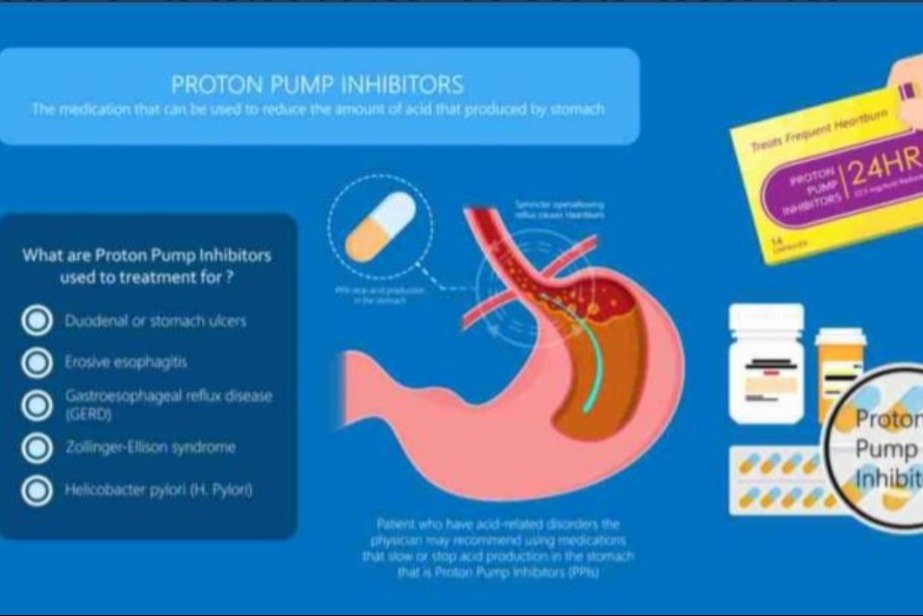
Proton pump inhibitors (PPIs) – such as omeprazole, esomeprazole, pantoprazole, and lansoprazole – are among the most widely prescribed medications worldwide. They work by blocking the stomach’s proton pump (H⁺/K⁺ ATPase), the final step in acid secretion, thereby powerfully reducing stomach acid. This makes them very effective for conditions like reflux, ulcers, and stomach protection in people taking N-SAIDs or steroids. For short-term use, they can be highly beneficial and sometimes life-saving.
But long-term use is increasingly under the microscope. Many people remain on PPIs for years without review, and research now shows that while acid suppression can be protective, it also carries risks – especially in relation to gut health, nutrient absorption, infections, and possibly even inflammatory and autoimmune conditions.
History and Development
1970s: Scientists identified the proton pump as the final pathway of acid secretion.
1979: Omeprazole, the first PPI, was synthesized.
1989: Omeprazole (Losec/Prilosec) was released, quickly becoming standard care.
Over the following decades, PPIs largely replaced older H₂ blockers like ranitidine because of their stronger and longer-lasting effect.
Today, PPIs are among the most prescribed medications globally.
Why Doctors Prescribe PPIs
PPIs are commonly used for:
Gastroesophageal reflux disease (GERD)
Peptic ulcers (stomach or duodenal)
Helicobacter pylori eradication (as part of triple or quadruple therapy with antibiotics)
Zollinger–Ellison syndrome (rare, very high acid secretion)
Preventing NSAID- or steroid-induced ulcers
Protection following upper gastrointestinal bleeding or surgery
They’re valued because they quickly relieve symptoms and prevent serious complications.
PPIs, Antibiotics, and Infections
PPIs are often combined with antibiotics for H. pylori treatment. By raising gastric pH, they make the bacteria more vulnerable to antibiotics.
However, reducing stomach acid also allows more pathogens to survive and reach the intestines. This raises the risk of Clostridioides difficile infection, with studies showing a 65–70% increased risk in PPI users compared to non-users.
Long-term acid suppression is also linked to small intestinal bacterial overgrowth (SIBO), with meta-analyses showing about a 2- to 3-fold increased risk in long-term PPI users.
Gut Health, Microbiome, and Intestinal Permeability
Stomach acid is a natural barrier against harmful microbes. Suppressing acid with PPIs can:
Increase susceptibility to foodborne pathogens
Reduce microbiome diversity and promote overgrowth of potentially harmful bacteria
Increase the risk of gut infections and dysbiosis
Contribute to greater intestinal permeability (“leaky gut”), which may fuel systemic inflammation and autoimmune processes
For people with inflammatory arthritis or Crohn’s disease, these changes may be particularly important.
PPIs and Arthritis & Autoimmune Disease
Rheumatoid Arthritis (RA)
In large prospective cohorts, regular PPI use was associated with a 44% higher risk of developing RA, with risk rising to 73% higher after four or more years of use. Importantly, risk decreased after stopping.
In a UK RA cohort, patients taking both oral glucocorticoids and PPIs had a 1.6-fold higher risk of osteoporotic fractures compared to those not using either drug.
PPIs can reduce clearance of methotrexate, especially at high doses, raising toxicity risks.
Osteoarthritis (OA)
A large UK database study found PPI users had a 20–25% higher risk of knee replacement compared with non-users, suggesting a possible role in disease progression.
A 2024 genetic study suggested omeprazole exposure may increase OA risk by about 25% (odds ratio ~1.25), though causality is still debated.
Inflammatory Bowel Disease (IBD)
A pooled analysis of over 640,000 people found regular PPI users had a 42% higher risk of developing IBD (including both Crohn’s disease and ulcerative colitis).
However, other carefully designed studies comparing new PPI verses new H₂ blocker users did not find a clear increase, showing this link remains controversial.
Multiple studies consistently show PPIs are associated with microscopic colitis, with odds ratios ranging from 2 to 7 times higher risk.
General Health Effects and Side Effects
Benefits
Effective at healing ulcers and reducing reflux symptoms
Protects against bleeding in high-risk patients
Improves quality of life for many with GERD
Risks (especially with long-term use)
Nutrient malabsorption: up to 30–40% increased risk of B12 deficiency in chronic users; also linked to lower magnesium, calcium, and iron
Fractures: long-term use is linked to a 30% higher risk of hip fractures in some studies
Kidney disease: chronic PPI use is associated with a 20–50% higher risk of chronic kidney disease
Infections: as noted, pneumonia risk is modestly elevated (~20–30% increase), while C. difficile risk is much higher (~70% increase)
Rebound acid hypersecretion: symptoms can worsen sharply if PPIs are suddenly stopped
Possible dementia link: some studies suggest a 30–40% higher risk, but evidence is inconsistent
Big Picture Understanding
PPIs are highly effective and often essential in the short term. But their long-term use should be carefully reviewed. For some people with arthritis, autoimmune disease, or gut health issues, the effects on microbiome, nutrient absorption, and systemic inflammation could be especially relevant.
References
NHS/NHS II cohort study on PPIs and rheumatoid arthritis risk (HR 1.44, 95% CI 1.10–1.89; >4 years HR 1.73)
UK RA cohort study on PPIs, glucocorticoids, and fracture risk (1.6-fold increase)
Studies on PPI interactions with methotrexate clearance
UK knee osteoarthritis database studies on PPIs and knee replacement risk (~20–25% higher)
2024 Mendelian randomization study: omeprazole linked to ~25% higher OA risk (OR 1.25)
Pooled cohorts (NHS, NHS II, UK Biobank, >640,000 people) showing 42% higher IBD risk with PPI use
Comparative new-user studies (PPI vs H₂ blocker) showing no clear IBD risk increase
Registry studies on PPIs and microscopic colitis (OR 2–7)
Meta-analyses on PPIs and SIBO (2–3x increased risk)
WHO and clinical reviews on nutrient malabsorption, fracture risk, kidney disease, dementia