
Boswellia
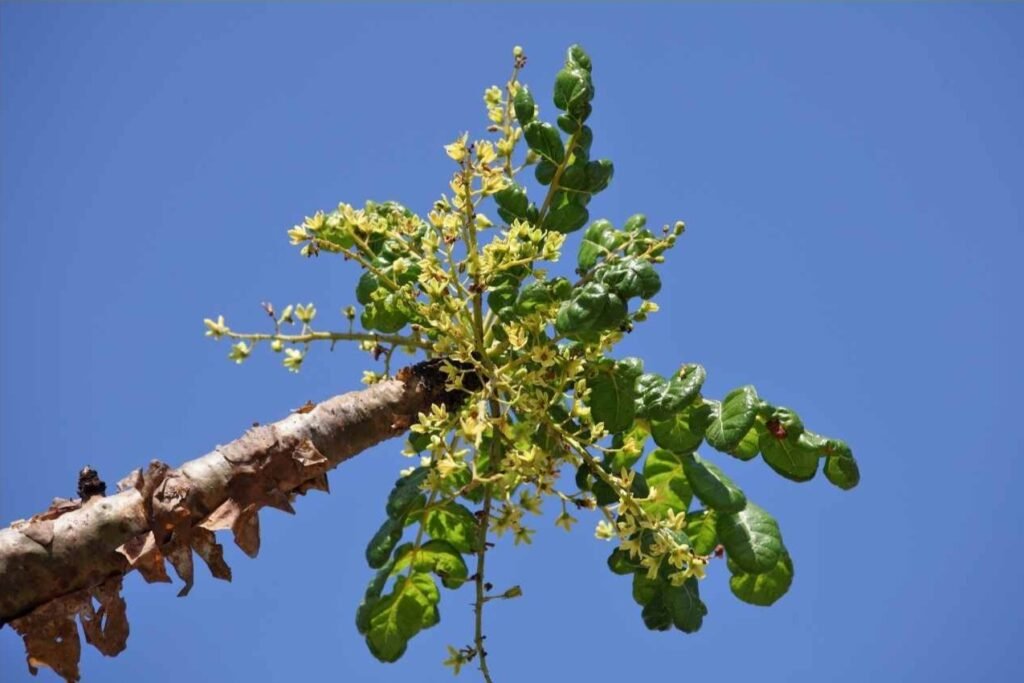
Boswellia: Key Points
- Clinically studied herbal anti-inflammatory used for arthritis and autoimmune conditions
- Works by inhibiting 5-LOX, leukotrienes, and inflammatory cytokines (TNF-α, IL-6)
- Shown to reduce joint pain, stiffness, and swelling in rheumatoid arthritis, osteoarthritis, and ankylosing spondylitis
- May help protect cartilage and slow joint degeneration over time
- Generally well tolerated, with fewer long-term risks than N SAID medications
- Best taken as a standardized extract (30–40% boswellic acids) with food
Scientific Overview of Boswellia for Inflammatory Arthritis
Boswellia serrata, a resinous extract from the Boswellia tree, has been used for centuries in traditional Indian and Middle Eastern medicine for its anti-inflammatory and pain-relieving properties. Modern clinical trials and biochemical studies support its use in inflammatory arthritic conditions such as rheumatoid arthritis, psoriatic arthritis, and ankylosing spondylitis, as well as osteoarthritis, which, while not classically autoimmune, is increasingly recognised to involve inflammatory processes that drive pain and cartilage breakdown.
Mechanisms of Action: How Boswellia Reduces Inflammation
The primary active constituents of Boswellia are boswellic acids, especially acetyl-11-keto-β-boswellic acid (AKBA). These compounds act through several anti-inflammatory mechanisms:
Inhibition of 5-lipoxygenase (5-LOX):
This blocks leukotriene synthesis, which reduces immune overactivation and tissue inflammation – a key factor in autoimmune conditions like RA and ankylosing spondylitis.Partial inhibition of COX-2:
Similar to N SAIDs but more selective, leading to anti-inflammatory effects with less gastric or cardiovascular risk.Suppression of pro-inflammatory cytokines:
Including TNF-alpha, IL-1β, and IL-6, which are elevated in autoimmune arthritis and drive joint degradation and pain.Matrix metalloproteinase (MMP) inhibition:
These enzymes break down cartilage and connective tissue. Boswellia may help preserve joint integrity by downregulating MMPs.Mast cell stabilization:
Emerging evidence suggests boswellic acids can reduce mast cell activation, a common issue in histamine-driven and autoimmune inflammation.
Clinical Evidence: Human Trials and Meta-Analyses
Numerous double-blind, placebo-controlled trials and meta-analyses support the effectiveness of Boswellia in managing inflammatory arthritis:
A 2020 meta-analysis in BMC Complementary Medicine evaluated 260 participants across 7 trials and concluded that Boswellia significantly reduced pain, morning stiffness, and joint swelling in patients with RA and OA, with minimal adverse effects.
A randomized controlled trial (2019, Phytomedicine) involving patients with knee osteoarthritis showed that 100 mg of AKBA daily significantly reduced pain scores and improved function within four weeks.
In ankylosing spondylitis, studies are fewer but promising. A 2018 trial in India showed improvements in ESR, CRP, and spinal mobility in patients taking 300 mg of standardized Boswellia extract twice daily for 12 weeks.
In RA, a 2011 study in International Journal of Medical Sciences demonstrated that 300 mg of Boswellia extract taken thrice daily significantly reduced joint swelling and pain compared to placebo.
Benefits of Boswellia for Autoimmune and Inflammatory Conditions
Reduces joint pain and stiffness
Protects cartilage and connective tissue
Modulates immune overactivation
Reduces systemic inflammation (CRP, TNF-alpha, IL-6)
May reduce reliance on N SAIDs and steroids
Supports gut integrity and may reduce colitis in IBD patients
Dosage Guidelines and Supplement Forms
Most clinical studies use a standardized Boswellia extract providing at least 30–40% boswellic acids, with AKBA content of 10–15% for optimal effect.
Typical dosages:
300–500 mg, 2–3 times daily of standardized extract
(equivalent to 600–1500 mg/day total)Some formulations use 100–200 mg of pure AKBA per day for targeted effects
For mild osteoarthritis: 300 mg twice daily
For autoimmune arthritis or ankylosing spondylitis: up to 1500 mg/day
Absorption tip:
Boswellic acids are fat-soluble, so it’s best taken with a meal containing healthy fats to improve bioavailability.
Safety and Side Effects
Boswellia is generally well tolerated with minimal side effects. Reported reactions are rare and usually mild:
Occasional gastrointestinal symptoms: nausea, acid reflux, or diarrhea
Possible skin rash or itching in sensitive individuals
Cautions:
Boswellia may interact with N SAIDs, anticoagulants, or immunosuppressive drugs
Should be used with care in pregnancy or breastfeeding (insufficient safety data)
May reduce the effectiveness of some chemotherapy drugs (check with healthcare provider)
Boswellia Compared to N SAIDs
Boswellia offers comparable pain relief in arthritis trials, without the gut lining damage, bleeding risk, or cardiovascular side effects of long-term N SAID use.
Unlike N SAIDs, Boswellia may also slow joint degeneration and support cartilage preservation.
Stacking and Synergy
Boswellia may work synergistically with:
Curcumin (turmeric) – enhances multiple inflammation-regulating pathways
- Ginger – supports pain relief and inflammation control through overlapping anti-inflammatory pathways.
Quercetin – supports mast cell stabilization and cytokine modulation
Magnesium & Omega-3s – systemic anti-inflammatory and tissue-support roles
Vitamin D – immune regulation support
Conclusion
Boswellia serrata is a scientifically supported, well-tolerated, and multi-targeted anti-inflammatory supplement ideal for individuals managing autoimmune and inflammatory arthritis. By inhibiting key inflammatory pathways while supporting joint integrity and immune balance, it offers a powerful natural alternative – or adjunct – to pharmaceutical anti-inflammatories. Standardized extracts taken consistently over 4–12 weeks are typically needed to see full benefits.