
Quercetin
📌 Quercetin Key Points
Found naturally in onions, apples, berries, kale, and tea.
Potent anti-inflammatory, antioxidant, antiviral, and antihistamine flavonoid.
Suppresses NF-κB, JAK, STAT, COX, and LOX inflammatory pathways.
Reduces cytokines TNF-α, IL-1β, IL-6, and CRP in RCTs.
Protects cartilage and lowers MMP enzymes in joints.
Stabilizes mast cells and reduces histamine – supports allergy and MCAS sufferers.
Enhances gut barrier integrity and beneficial microbiota.
Supports mitochondrial energy production and reduces fatigue.
Works synergistically with vitamin C and bromelain.
Typical effective dose: 500–1000 mg/day
🌿 Quercetin – for Inflammation, Arthritis and Back Pain
What is Quercetin?
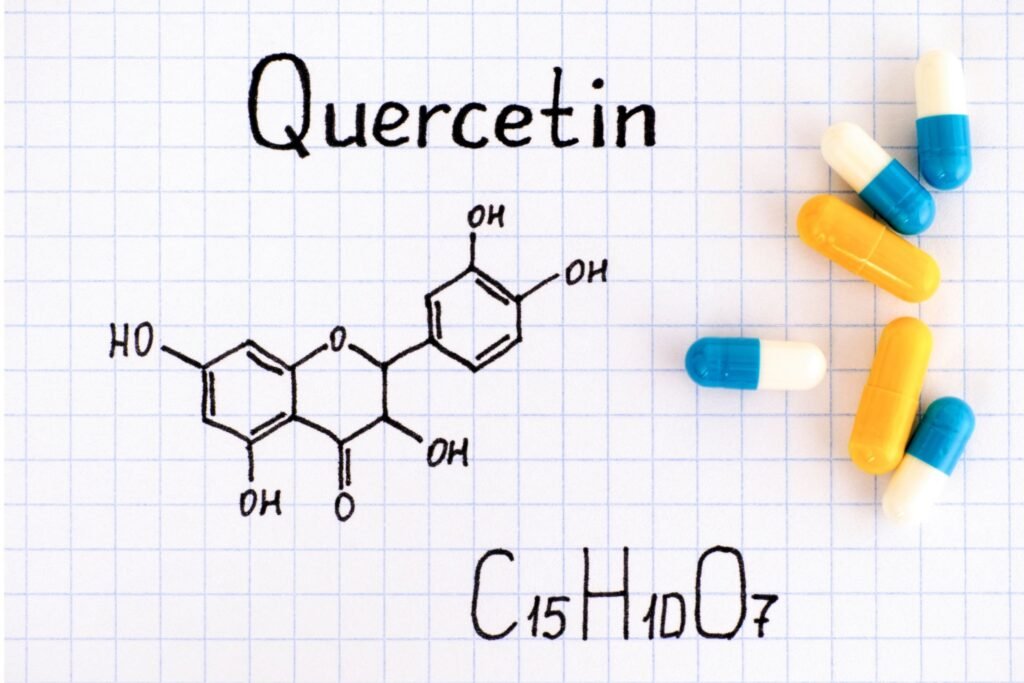
Quercetin is a naturally occurring flavanol, part of the polyphenol family, found in many plant foods including onions, capers, kale, apples, berries, tea, and grapes. It’s known for its antioxidant, anti-inflammatory, antiviral, and antihistamine properties.
As a bioactive compound, quercetin acts at multiple levels to modulate immune responses, inhibit inflammatory signalling, and support tissue repair.
🔬 Mechanisms of Action
Quercetin’s broad therapeutic potential lies in its multi-targeted biochemical effects:
1, Inhibition of Inflammatory Signalling Pathways.
Quercetin suppresses activation of NF-κB and AP-1, transcription factors that drive inflammatory cytokine production (e.g., TNF-α, IL-1β, IL-6). It also inhibits the JAK, STAT pathway – used by immune cells to amplify inflammation in rheumatoid arthritis and other autoimmune diseases (Li et al., Frontiers in Immunology, 2016).
2, Mast Cell Stabilization and Histamine Control.
Quercetin stabilizes mast cell membranes and inhibits histidine decarboxylase, the enzyme that converts histidine into histamine. This reduces allergic reactivity, itching, flushing, and swelling – without the drowsiness caused by synthetic antihistamines (Kempuraj et al., Frontiers in Immunology, 2020).
3, Enzyme Modulation and Cartilage Protection.
Quercetin inhibits COX-2 and LOX enzymes that produce pro-inflammatory prostaglandins and leukotrienes. It also blocks matrix metalloproteinases (MMP-1, MMP-3, MMP-9) – Which are enzymes responsible for cartilage breakdown in arthritis (Boots et al., Pharmacology Research, 2008).
4, Gut Barrier and Microbiome Support.
It strengthens intestinal tight junctions (occludin, claudin, ZO-1) and reduces gut permeability (“leaky gut”), which is a major contributor to systemic inflammation. Quercetin also encourages beneficial gut microbes (Lactobacillus, Bifidobacterium) and suppresses endotoxin-producing pathogens (Frontiers in Microbiology, 2020).
5, Antioxidant and Mitochondrial Regulation.
Quercetin scavenges free radicals and enhances endogenous antioxidant enzymes – glutathione, superoxide dismutase (SOD), and catalase. It also promotes mitochondrial biogenesis and reduces oxidative damage, supporting energy production and fatigue recovery (Kawabata et al., Nutrients, 2015).
6, Immune and Viral Modulation.
Quercetin acts as a natural immunoregulatory molecule, modulating the balance of Th1/Th2 immune cells and reducing cytokine storms seen in viral and post-viral inflammatory states. It has been shown to inhibit replication of influenza, herpes simplex, and SARS-CoV-2 viruses in vitro (Colunga Biancatelli et al., Frontiers in Immunology, 2020).
📚 Evidence and Clinical Studies
Rheumatoid Arthritis and Autoimmune Conditions.
A double-blind RCT in women with rheumatoid arthritis (Iranian Journal of Allergy, Asthma and Immunology, 2017) demonstrated that 500 mg/day of quercetin for 8 weeks significantly reduced morning stiffness, pain, and DAS-28 scores, along with lowering TNF-α and CRP levels.
Another RCT (Ghavipour et al., Journal of the American College of Nutrition, 2012) reported improved antioxidant capacity and reduced inflammatory markers in RA patients after 8 weeks of quercetin.
A 2020 meta-analysis in Phytotherapy Research reviewed multiple RCTs and concluded that quercetin supplementation significantly lowered CRP, IL-6, and TNF-α in metabolic and inflammatory disorders, including arthritis.
Cartilage and Muscle Protection.
Preclinical studies show that quercetin reduces synovial inflammation, suppresses cartilage degradation enzymes (MMPs), and promotes chondrocyte survival. In exercise models, it also reduces muscle soreness and oxidative stress (Nair et al., Nutrients, 2018).
Gut and Barrier Function.
Animal studies confirm quercetin strengthens intestinal tight junctions and protects against endotoxin-induced inflammation (Zhang et al., Nutrients, 2018). In human studies, quercetin supplementation improved gut microbial diversity and reduced LPS levels, a driver of systemic inflammation.
Viral and Post-Infectious Fatigue.
Quercetin combined with vitamin C has been trialled for COVID-19 and long-COVID, showing reduced inflammatory markers and faster recovery times in small RCTs (Di Pierro et al., International Journal of General Medicine, 2021).
💪 Joint and Muscle Health
Quercetin protects cartilage and synovial tissue, reducing swelling, pain, and stiffness.
By lowering MMP activity and oxidative stress, it slows joint degradation in both rheumatoid and osteoarthritis.
It may also aid post-exercise recovery and muscle energy metabolism by supporting mitochondrial function.
🌸 Histamine and Mast Cell Modulation
Quercetin’s mast cell stabilising and antihistamine properties make it valuable for those with:
Histamine intolerance,
MCAS (mast cell activation syndrome), or
Allergic-type inflammatory disorders that often overlap with autoimmune disease.
It calms excessive immune reactivity and reduces histamine-related fatigue, flushing, headaches, and joint pain.
🦠 Gut Barrier and Microbiome Benefits
By improving gut barrier integrity and reducing bacterial endotoxin (LPS) leakage, quercetin helps interrupt the gut–joint axis that fuels autoimmune inflammation.
Quercetin enhances the environment for beneficial bacteria while suppressing inflammatory pathogens – a crucial mechanism in arthritis, IBD, and spondylarthritis.
⚡ Antioxidant and Mitochondrial Support
Oxidative stress drives joint and tissue damage in autoimmune disease.
Quercetin restores the body’s antioxidant defences and supports mitochondrial energy metabolism—reducing fatigue, enhancing endurance, and protecting cells from inflammatory damage.
🦠 Viral and Immune Recovery
Quercetin’s antiviral, anti-inflammatory, and antioxidant actions make it a valuable aid in post-viral fatigue, long-COVID, and chronic inflammatory recovery.
By reducing oxidative damage and rebalancing immune activity, it supports recovery of energy and resilience after infections.
🍊 Bioavailability and Synergistic Nutrients
Quercetin from whole foods is absorbed modestly, but bioavailability improves when combined with:
Vitamin C: enhances absorption and works synergistically as an antioxidant.
Bromelain: a pineapple enzyme that improves uptake and adds anti-inflammatory action.
Healthy fats: since quercetin is lipophilic, take it with a meal containing healthy fats – like a few walnuts, flax seeds and oats.
Phytosome or liposomal quercetin: advanced formulations with higher absorption rates.
💊 Therapeutic Use and Dosing
Mild support: 250–500 mg/day.
Therapeutic range (inflammation & immune modulation): 500–1000 mg/day, in divided doses.
Short-term acute support (viral illness or flare): up to 1500 mg/day under professional guidance.
⚠️ Precautions and Interactions
Generally safe and well tolerated.
Possible mild headache or digestive upset at high doses.
May interact with antibiotics, anticoagulants, corticosteroids, or immunosuppressants via CYP3A4 inhibition.
Consult a healthcare provider before use in pregnancy, kidney disease, or while using multiple medications.
🧭 Summary & Conclusion
Quercetin is a multi-functional flavonoid with extensive research supporting its role in reducing inflammation, regulating immunity, and protecting tissues from oxidative and microbial stress.
For people with arthritis, autoimmune disease, MCAS, or post-viral inflammation, quercetin provides measurable benefits:
lowers inflammatory cytokines,
protects cartilage,
stabilises mast cells, and
supports gut and mitochondrial health.
When combined with vitamin C, bromelain, and a nutrient-dense, plant-rich diet, quercetin can form part of a comprehensive, evidence-based strategy for natural inflammation control and long-term health.