
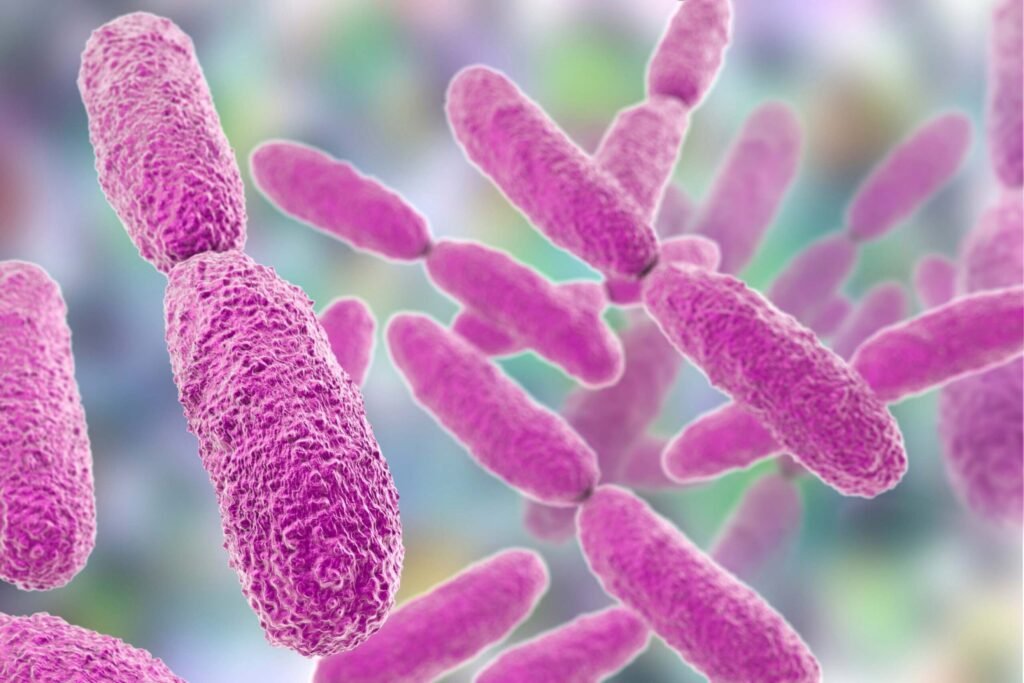
Klebsiella Pneumoniae
Klebsiella pneumoniae is a gut-dwelling bacterium linked to inflammatory conditions like ankylosing spondylitis (AS). Scientific research shows it thrives on refined carbs and sugar but can be suppressed through a whole food plant based diet and microbiome support strategies.
Key Takeaways
Klebsiella pneumoniae overgrowth is linked to A.S. and other autoimmune disorders.
Refined starches and sugars feed it – whole food starches do not.
Fiber-rich, plant-based diets reduce Klebsiella colonization.
Taurine from oysters and mussels supports beneficial gut microbes that suppress Klebsiella.
Boron-containing compounds showed strong anti-Klebsiella effects in lab models.
Antibiotics and Western-style low-fiber diets encourage overgrowth.
Gut diversity is protective – fermented foods and prebiotics help.
No need for a starch-free diet – just the right types of starch and fiber.
Klebsiella pneumoniae – What Science Says About Suppressing It
Why Klebsiella Matters for Spondyloarthropathies
A landmark 1982 study by Ebringer et al. (“Low‑starch diet trial in patients with ankylosing spondylitis”) showed K. pneumoniae overgrowth in AS patients, and that reducing refined starch intake improved both Klebsiella levels and symptoms.
Why Refined Starch, Not All Starch, Is Key
The 2024 study titled “Dietary carbohydrates regulate intestinal colonization” (JCI) found that refined starches and sugars feed Klebsiella, while complex fibers suppress it and support beneficial microbes – debunking low‑fiber avoidance.
What Keeps Klebsiella Under Control?
High-Fiber, Microbiome-Diverse Diets
A 2024 Cambridge University study (“Feeding your good gut bacteria through fibre”) confirmed that diverse high fiber intake lowers colonization by Enterobacteriaceae, including Klebsiella.
Supportive Commensals
A 2024 commentary in Nature described an F18‑microbe mix that outcompetes Klebsiella by consuming gluconate—demonstrating microbial competition strategies.
Taurine‑Driven Gut Protection
A 2023 study by Huimin Ye et al. in Nature Communications reported that taurine-fed mice developed hydrogen-sulfide-producing Deltaproteobacteria (e.g. Taurinivorans muris) that protected against Klebsiella pneumoniae colonization.
Taurine‑rich foods include: shellfish (e.g., oysters, mussels) Oysters are also very high in Zink. Careful not to over do it.
Boron (calcium fructoborate) & Klebsiella – what the research says (short)
Lab (in vitro) research shows some boron compounds inhibit Klebsiella pneumoniae growth and biofilm formation (Çelebi et al., 2023). This suggests a potential antimicrobial mechanism but no clinical human trials have shown boron cures or prevents Klebsiella infections. DergiPark
Boron for joint inflammation (clinical trials)
Calcium fructoborate (CFB/FruiteX-B®) has been tested in randomized double-blind trials for knee/ joint discomfort and inflammatory markers. Typical trial regimens deliver ≈3–6.4 mg elemental boron/day (e.g., 110 mg CFB twice daily ≈ 6.4 mg B/day) and showed modest improvements in pain and CRP/IL-6 over weeks. (Rogoveanu et al., 2011/2014; Pietrzkowski et al., 2014). Europe PMCDove Medical Press
🚫 Things That Promote Overgrowth
High intake of refined carbohydrates and sugars
Antibiotic exposure, which disrupts microbial diversity and opens ecological niche for Klebsiella
Western-style low-fiber, high-fat diets, which shift gut ecology in favor of Enterobacteriaceae
✅ Evidence-Based Strategies to Keep Klebsiella in Check
Avoid refined starch and sugars, but continue whole-food plant starches (legumes, oats, whole grains).
Prioritize high-fiber, diverse plant-based meals to support colonization resistance.
Include taurine-rich foods like mussels and occasionally oysters to support hydrogen-sulfide-producing commensals that suppress Klebsiella.
Consider boron supplementation (~3–6 mg/day; research used boron‑derived compounds) as adjunct – but only short-term and under guidance.
Encourage microbial competition via a varied microbiome; fermented foods, prebiotics, and resistant starch support these ecosystems.
If stool testing indicates overgrowth, consider time-limited botanical tools (e.g., pomegranate husk or polyphenol-rich herbal support) followed by fiber-rich rebalancing.
📌 Summary Table
| Strategy | Scientific Basis |
|---|---|
| High-fiber, plant-based diet | Suppresses Klebsiella by promoting microbial diversity (Cambridge 2024) |
| Reduce refined carbs/sugars | Limits substrate fueling Klebsiella (JCI 2024) |
| Taurine-rich diet/supplement | Encourages protective gut bacteria and hydrogen sulfide production |
| Boron compounds (in vitro) | Human cell model study shows inhibition of K. pneumoniae growth and biofilms |
| Community microbial support | Promotes competition via commensals (F18-mix, Nature commentary 2024) |